Where ancient fortresses meet turquoise waters and golden dunes — Oman is the Middle East's most enchanting secret
There is a particular kind of magic that arrives when you cross into Oman for the first time. The Arabian Peninsula stretches wide and wild in every direction, yet this country — the Sultanate of Oman — feels nothing like the gleaming skyscrapers and manufactured spectacle you might expect from the Gulf. Instead, Oman offers something far more rare: authenticity. Here, the past is not curated behind museum glass. It breathes through the watchtowers of medieval forts, exhales in the cool mountain air above Jebel Shams, and shimmers on the surface of tide pools at Wadi Shab. Pinkstone Travel has spent years crafting journeys that honour Oman's true soul, and this guide is the distillation of everything we have learned: where to hike, where to sink your feet into sand, and which desert castles will leave you speechless.
Whether you have one week or three, Oman rewards every kind of traveller — the hardcore trekker who chases canyon ridgelines before sunrise, the beach wanderer who needs nothing more than a hammock and a horizon, and the history lover who can spend hours tracing Arabic calligraphy on a 400-year-old castle wall. This is the land where all three obsessions live in perfect, improbable harmony.
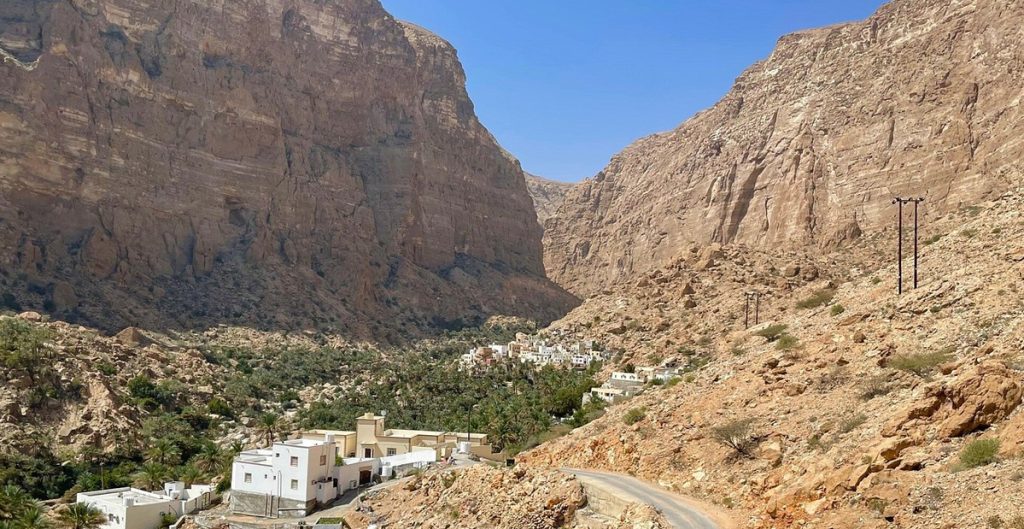
Oman's topography is the stuff of hiking dreams: the Hajar Mountain range rises sharply from the desert floor, sliced through by ancient falaj irrigation channels and dotted with villages that have clung to cliff edges for centuries. The trails here do not merely walk you through scenery — they walk you through time.
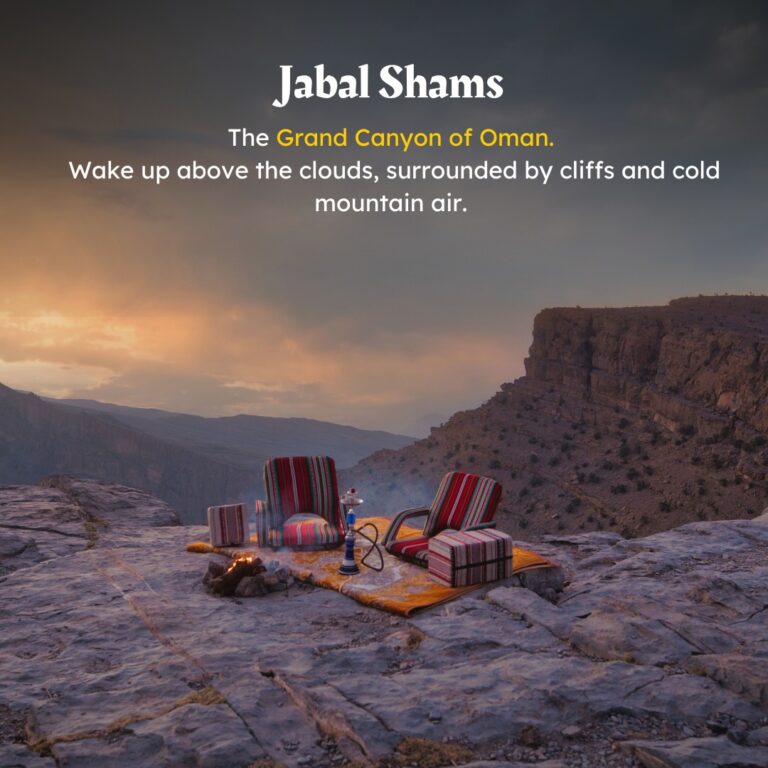
Standing at 3,009 metres, Jebel Shams is Oman's highest peak, and the trail that loops around its shoulder — locally known as the Balcony Walk — is the country's most celebrated hike. The path traces the rim of Wadi Ghul, a vertiginous canyon that drops nearly 1,000 metres to a river valley below, earning its nickname as the Grand Canyon of Arabia. On a clear winter morning, the shadows stretch dramatically across the canyon walls, painting them in alternating bands of rust, cream, and charcoal.
The hike itself is classified as moderate, covering roughly 7 kilometres return. The trail passes abandoned stone villages — ghosts of a time when people farmed these impossible slopes — and the views from the edge are genuinely stop-you-in-your-tracks dramatic. Pinkstone Travel recommends starting before 7am to catch the canyon in morning gold and to avoid the midday heat. Wear sturdy shoes; the limestone path is uneven in places, and some sections require you to use your hands for balance. The reward is unlike anything else in the Gulf.
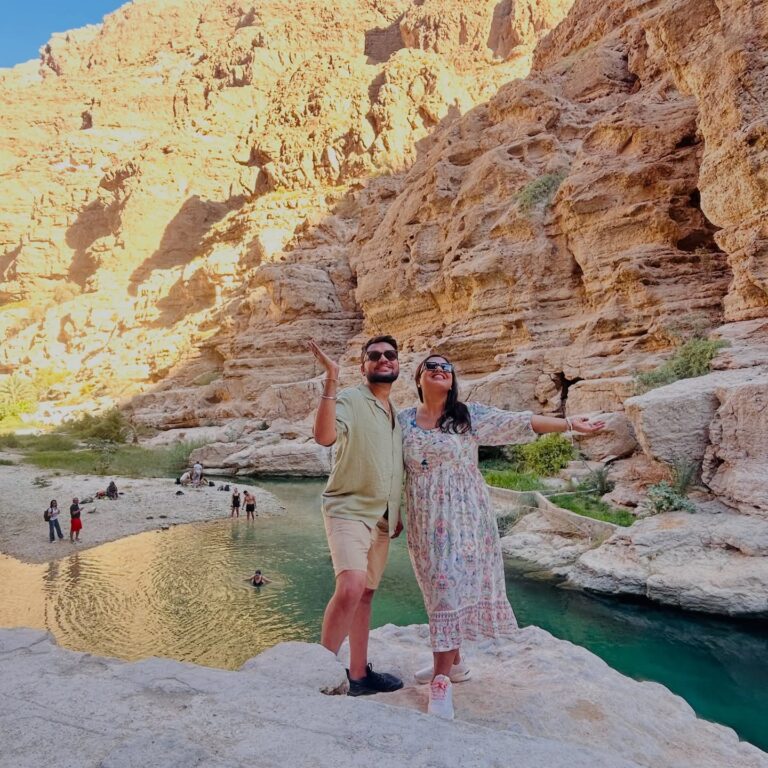
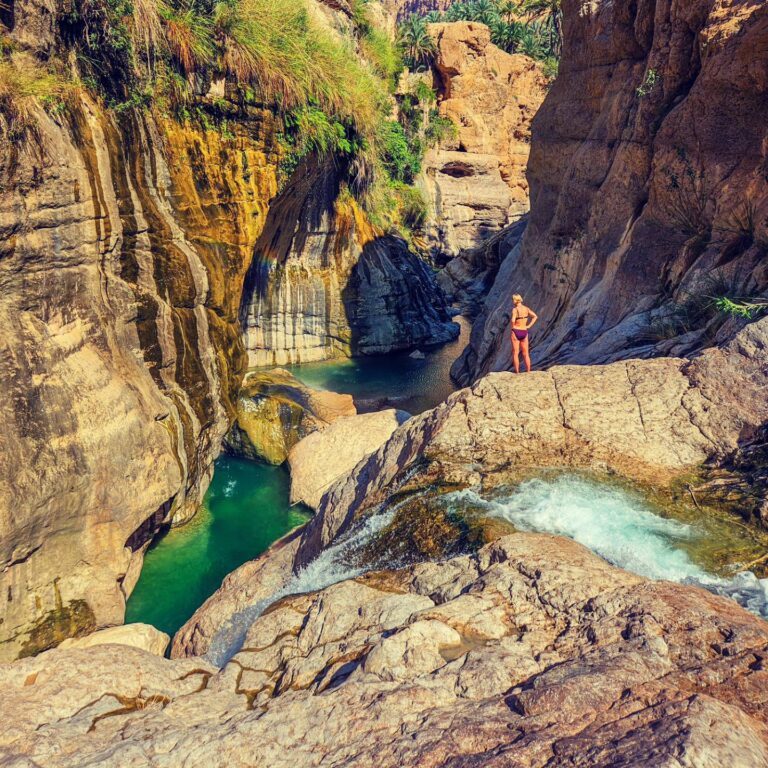
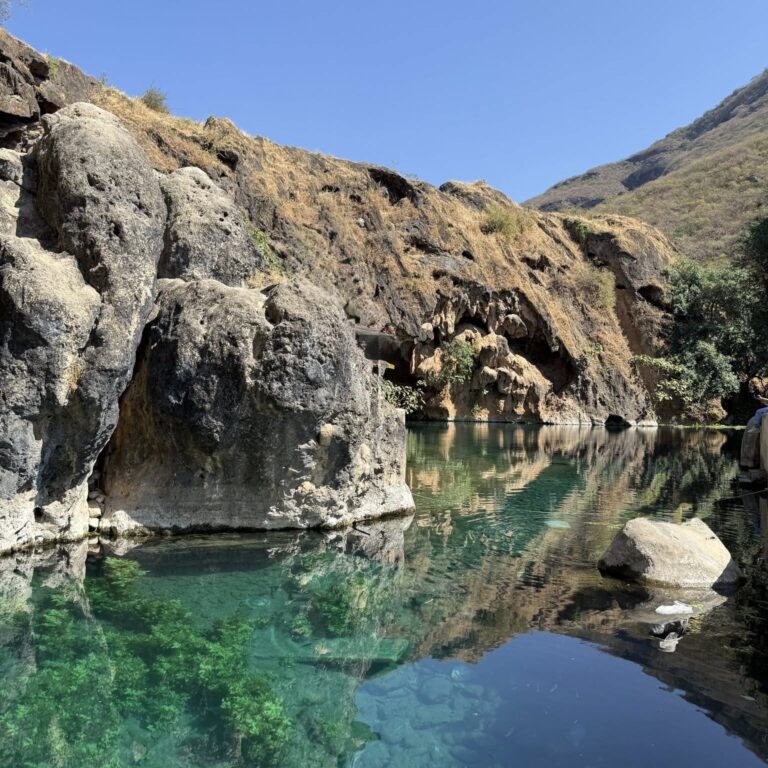
If Jebel Shams is about height, Wadi Shab is about depth — in every sense. Located between Muscat and Sur on Oman's Eastern Hajar coast, this emerald gorge is one of those places that genuinely looks too beautiful to be real. The hike begins with a short boat crossing (less than five minutes, a few rials) and then winds through a wide, palm-fringed wadi before narrowing dramatically into slot-canyon territory. The walls close in, the air cools, and then suddenly the path forces you into the water.
You swim the final section of Wadi Shab, clutching a dry bag above your head, until you squeeze through a hidden cave entrance and emerge into a cathedral-like chamber where a waterfall pours into a pool of extraordinary turquoise water. The whole experience takes three to four hours return. Go on a weekday if possible — Wadi Shab is popular, and the magic is best when you are not sharing it with a crowd.
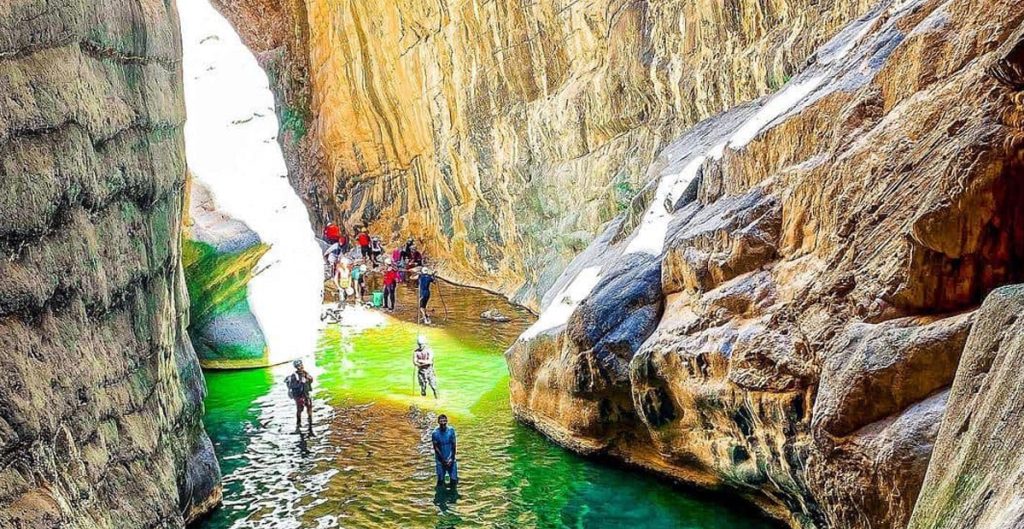
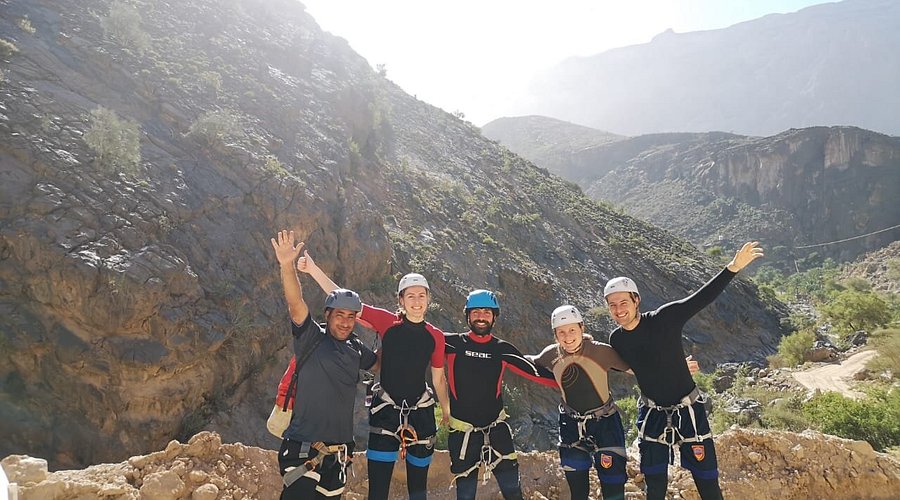
Snake Canyon earns its name honestly: the trail twists and writhes through a narrow limestone gorge, demanding that you scramble, wade, jump, and clamber your way through 7 kilometres of pure geological drama. This is not a casual stroll — it requires confidence in the water, a good head for heights, and preferably a local guide who knows the route. But for those who take it on, Snake Canyon delivers some of the most exhilarating hours available anywhere in the Middle East. Pack a waterproof bag, wear shoes that can get wet, and prepare to arrive at the finish line grinning like a child.
Oman's coastline stretches for nearly 3,165 kilometres, and yet the country's beaches remain among the least crowded in the world. The Arabian Sea here is warm, often perfectly calm in sheltered coves, and coloured in extraordinary gradients from green to deep blue. These are beaches for people who still believe in genuine discovery.
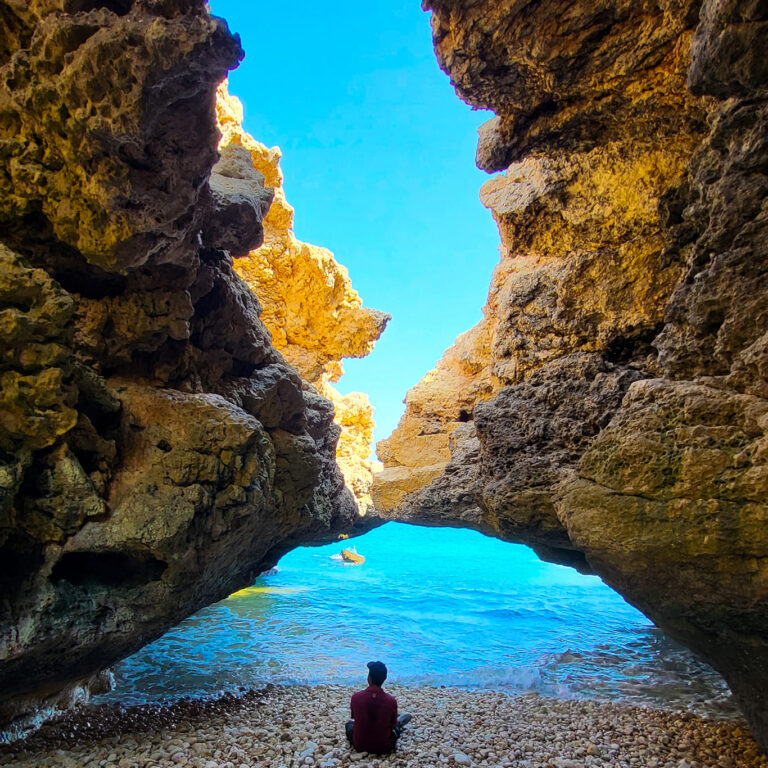
Tucked between rugged limestone cliffs about two hours south of Muscat, Fins Beach is one of those places that Oman regulars whisper about and first-timers cannot quite believe exists. The water is a shade of blue that defies easy description — somewhere between aquamarine and the inside of a glacier — and the beach itself is bordered by dramatic eroded red and white rock formations that plunge directly into the sea.
There are no resorts here, no vendors, no noise. Just the water, the cliffs, and the company of the occasional osprey circling overhead.
The snorkelling at Fins is world-class. Bring your own gear because rental facilities are non-existent, and head to the rocky outcroppings at the northern end of the beach for the best coral.
Dolphins regularly swim through the bay in the early mornings, and between May and October, green sea turtles nest on the southern stretch after dark.
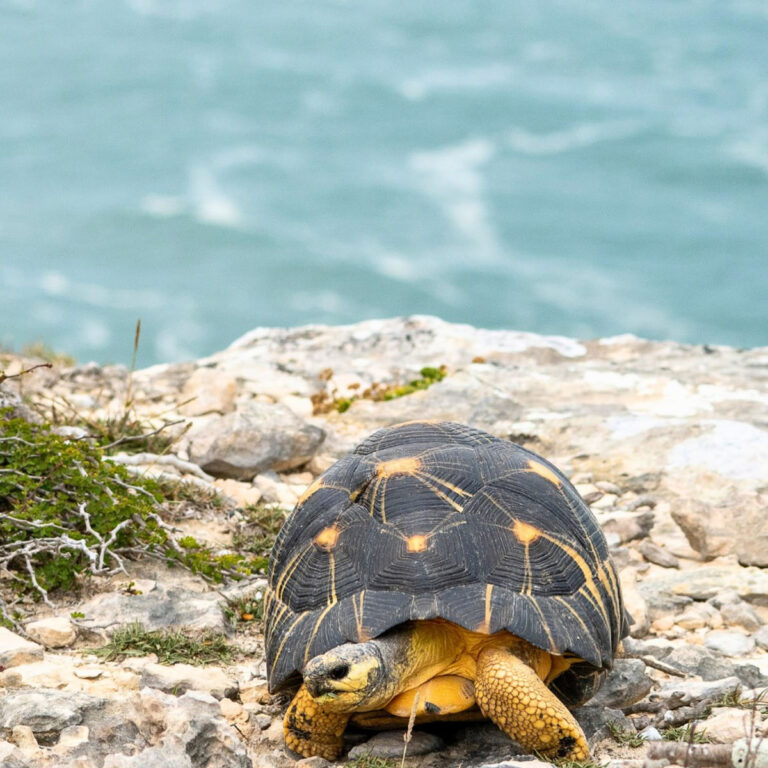
The easternmost point of the Arabian Peninsula, Ras al Jinz, is home to one of the most significant green sea turtle nesting sites in the Indian Ocean. Every night, regardless of season, female turtles haul themselves up the dark sand to lay their eggs in the same spot their mothers visited decades before. Watching this ancient ritual — the enormous creatures moving with improbable grace, the moonlight reflecting off the sea, the total silence of it all — is one of the most profound wildlife experiences available anywhere on earth.
The Ras al Jinz Turtle Reserve manages guided night tours that run year-round, with peak nesting between June and August. Book well in advance through the official reserve or with Pinkstone Travel to guarantee a spot. By day, the adjacent beach is a lovely, quiet stretch for swimming, and the reserve's museum provides fascinating context about the turtles' migratory patterns and Oman's conservation efforts.
During the khareef season — roughly June through September — the southern city of Salalah is transformed by the Indian Ocean monsoon into something utterly unlike the rest of Oman.
The dry, ochre landscape turns green almost overnight; waterfalls appear on cliff faces that are bone-dry for the other eight months of the year; and the beaches along the Dhofar coast, normally sun-blasted and quiet, take on a dramatic, misty quality.
Mughsail Beach is the standout: its blowholes erupt theatrically in rough monsoon swells, sending jets of seawater high into the fog. It is extraordinary, and completely unique to this corner of the Arabian Peninsula.
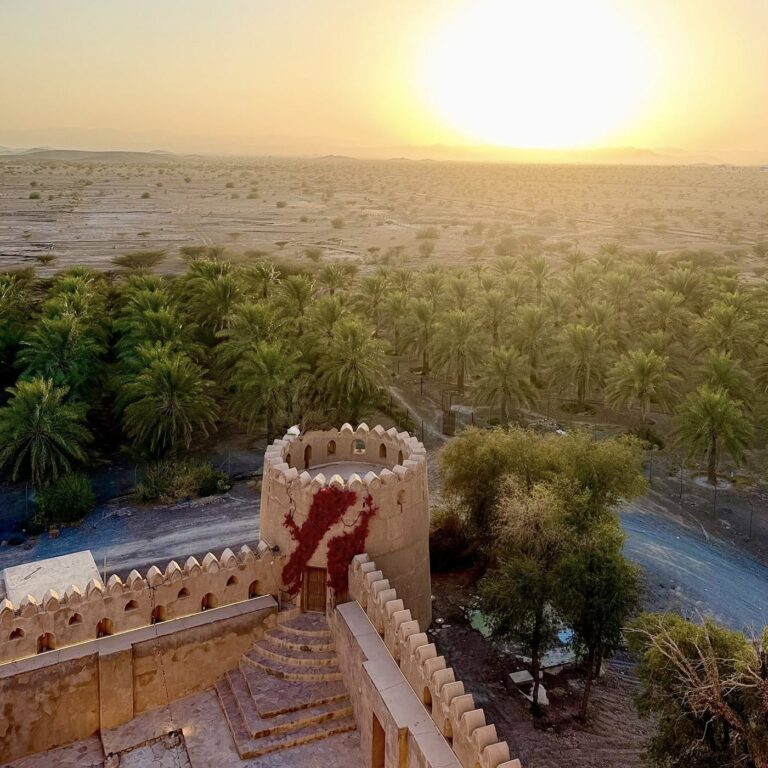
Oman has more forts and castles than any other country in the Arab world — over 500 of them, scattered across desert plains, perched above oasis towns, and guarding mountain passes that were once critical trade routes connecting the Arabian interior to the frankincense ports of the Dhofar coast. Each one tells a different story, and together they form an architectural biography of a civilisation that has been building, defending, and reinventing itself for millennia.
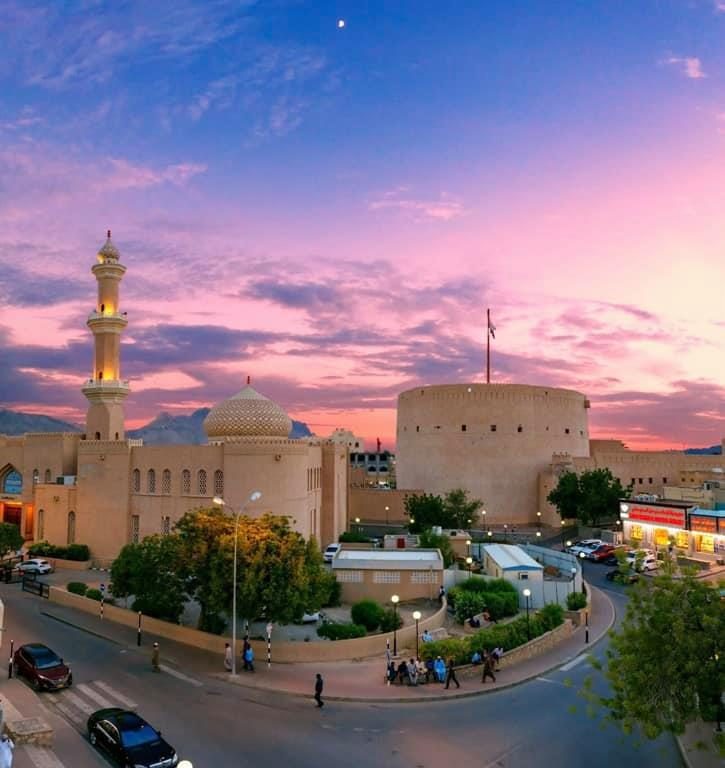
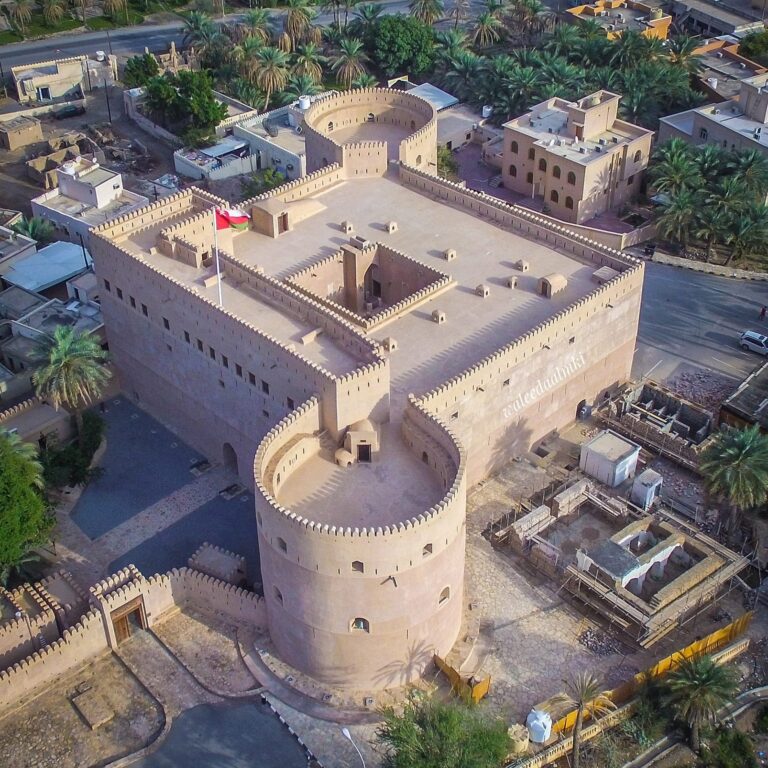
Nizwa was the ancient capital of Oman, and its fort is the most visited monument in the country — deservedly so. The massive circular tower, completed in the 1650s under Imam Sultan bin Saif al Ya'arubi, took 12 years to build and is one of the largest defensive towers ever constructed in the Arabian Peninsula. From the top, the view across the date palm oasis of Nizwa and out to the Hajar Mountains is magnificent enough to justify the modest entrance fee several times over.
But Nizwa Fort is not merely a building — it is a living part of the city. The Friday livestock market surrounding the fort's walls is one of the most authentic market experiences left in the Gulf: goats and cattle change hands through shouted negotiations, silver jewellery glints in the morning light, and elderly men in white dishdashas move through the crowd with unhurried dignity. Combine the fort visit with time at the souq for a full morning that will stay with you for years.
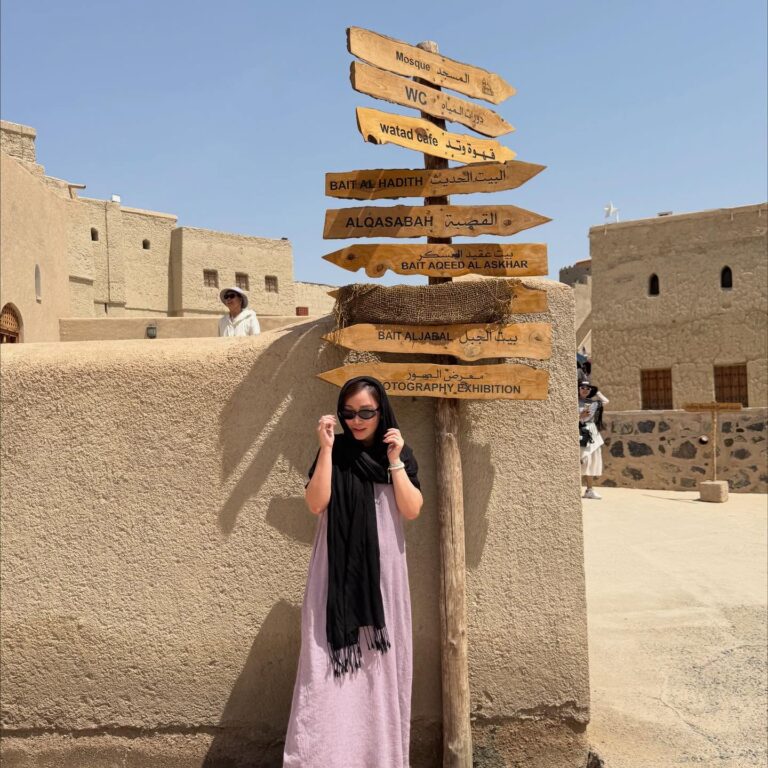
Designated a UNESCO World Heritage Site in 1987, Bahla Fort is arguably the most dramatic fortress in Oman, rising from a landscape of date palms and traditional mud-brick houses like something from a fairy tale. The fort dates back to the 12th century and was expanded continuously over the following 500 years, resulting in a complex of towers, walls, and internal chambers that takes a full morning to properly explore.
Bahla itself is a town with a reputation that goes beyond architecture. Local tradition holds that Bahla has long been a centre of folk magic and sorcery — a reputation its residents wear with bemused affection. The 13-kilometre falaj irrigation channel that still runs through the oasis is a feat of pre-modern engineering that carries water from the mountains to the town's farms. Walking along this channel in the late afternoon, with the fort silhouetted against an amber sky, is one of Oman's great slow pleasures.
Designated a UNESCO World Heritage Site in 1987, Bahla Fort is arguably the most dramatic fortress in Oman, rising from a landscape of date palms and traditional mud-brick houses like something from a fairy tale. The fort dates back to the 12th century and was expanded continuously over the following 500 years, resulting in a complex of towers, walls, and internal chambers that takes a full morning to properly explore.
Bahla itself is a town with a reputation that goes beyond architecture. Local tradition holds that Bahla has long been a centre of folk magic and sorcery — a reputation its residents wear with bemused affection. The 13-kilometre falaj irrigation channel that still runs through the oasis is a feat of pre-modern engineering that carries water from the mountains to the town's farms. Walking along this channel in the late afternoon, with the fort silhouetted against an amber sky, is one of Oman's great slow pleasures.
A short drive from Bahla, Jabrin Castle stands apart from Oman's other fortifications because it was designed not purely for war but for refinement. Built in the 1670s by Imam Bil'arab bin Sultan, Jabrin served as a seat of learning and culture as much as a military stronghold. The interior rooms are extraordinary: elaborately painted wooden ceilings in deep reds, golds, and blues; inscriptions from the Quran and classical Arabic poetry carved into plaster; and a sense of intellectual ambition that feels startlingly modern.
The rooftop terrace of Jabrin offers panoramic views over the flat desert plain surrounding it, and on a quiet afternoon — particularly in winter — the castle can feel almost entirely private. Combine Jabrin with Bahla in a single day trip from Nizwa to make the most of this exceptional cluster of historic sites.
Built in the early 18th century in the Batinah region, Al Hazm Castle is perhaps the most architecturally sophisticated of all Oman's forts. Its two massive towers contain underground passages designed to allow defenders to move unseen, and the interior features a remarkable falaj channel that runs directly beneath the castle, providing a secure water supply during sieges.
The detailed plasterwork above the doorways and windows speaks to an era when Oman's rulers considered beauty and military pragmatism equally important concerns.
The ideal time to visit Oman for hiking and castle exploring is between October and April, when temperatures in the interior and mountains remain comfortably below 30°C. Coastal and beach destinations are enjoyable year-round, though the summer months bring intense heat to most of the country. The exception, as noted above, is Salalah: its khareef monsoon season makes it an extraordinary destination between June and September, when the rest of Oman bakes.
Oman is one of the safest countries in the world for independent travel, with a consistently courteous and welcoming local culture. Most visitors from Europe, North America, and Australia can obtain a visa on arrival or through the easy online e-visa system. The road network between major sites is excellent, and a hire car is by far the best way to explore the country's many wonders at your own pace. A 4WD is advisable if you plan to attempt any desert routes or unpaved mountain roads.
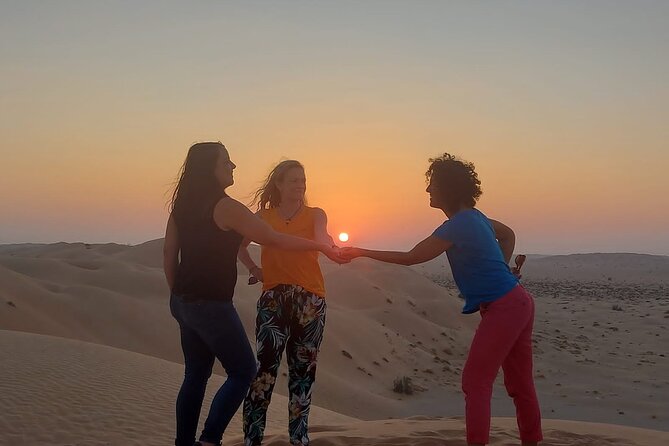
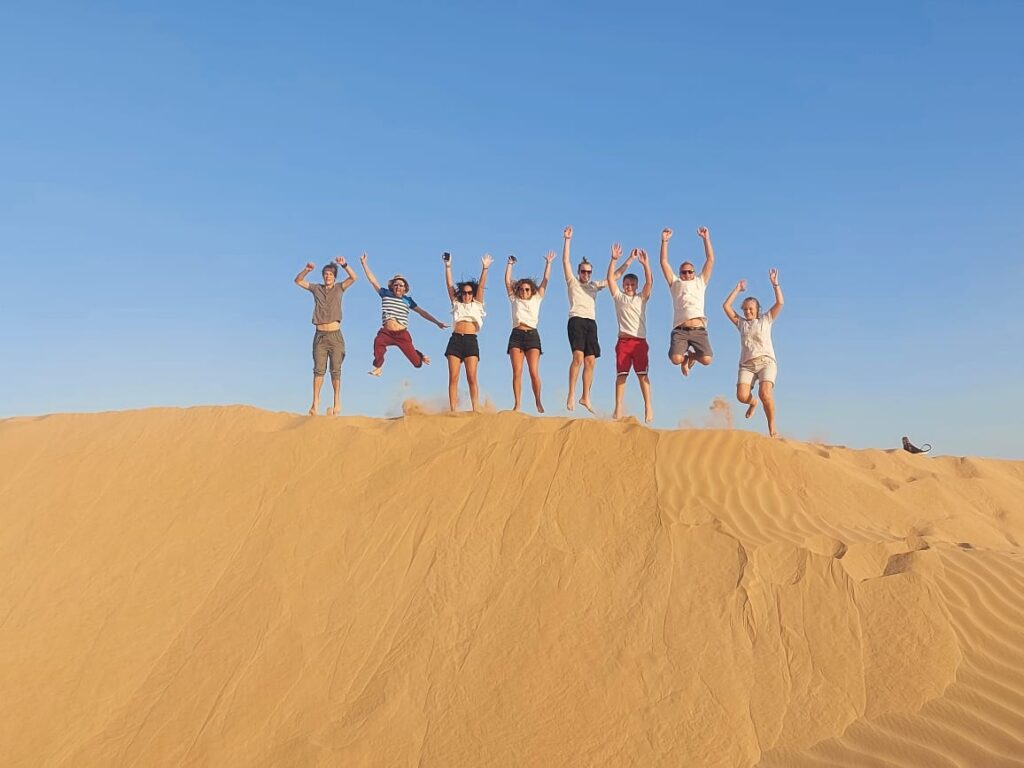
At Pinkstone Travel, we build bespoke Oman itineraries that balance every element of this remarkable country: the physical thrill of the trails, the meditative beauty of the beaches, and the intellectual richness of the fort circuit. Whether you want a private guided expedition into the canyon system of Snake Canyon, a curated three-day road trip connecting Nizwa, Bahla, and Jabrin, or a luxury camp experience in the Wahiba Sands dunes with a dawn beach visit to Fins on the same itinerary, we have the local knowledge and supplier relationships to make it seamless.

There is a phrase you will hear in Oman, offered by locals with genuine pride and without a trace of the tourist-board cheerfulness that tends to hollow these words out elsewhere: Ahlan wa sahlan — welcome, you are among family. In Oman, it is not a slogan. It is a description of how things actually are.
The hikes here will challenge your body and calm your mind simultaneously. The beaches will remind you what an undiscovered coastline actually feels like. And the castles — those extraordinary, enduring, gravity-defying testaments to human ingenuity and ambition — will make you reconsider everything you thought you knew about the ancient world.
Oman is not a destination you visit and check off your list. It is a place that rewires you — quietly, completely, and permanently. Pinkstone Travel is ready to take you there.
Book your Oman adventure tours with Pinkstone Travel, one of the reputed best travel agents in Oman. We are known for our client servicing and competitive rates, which make us unique. today!